
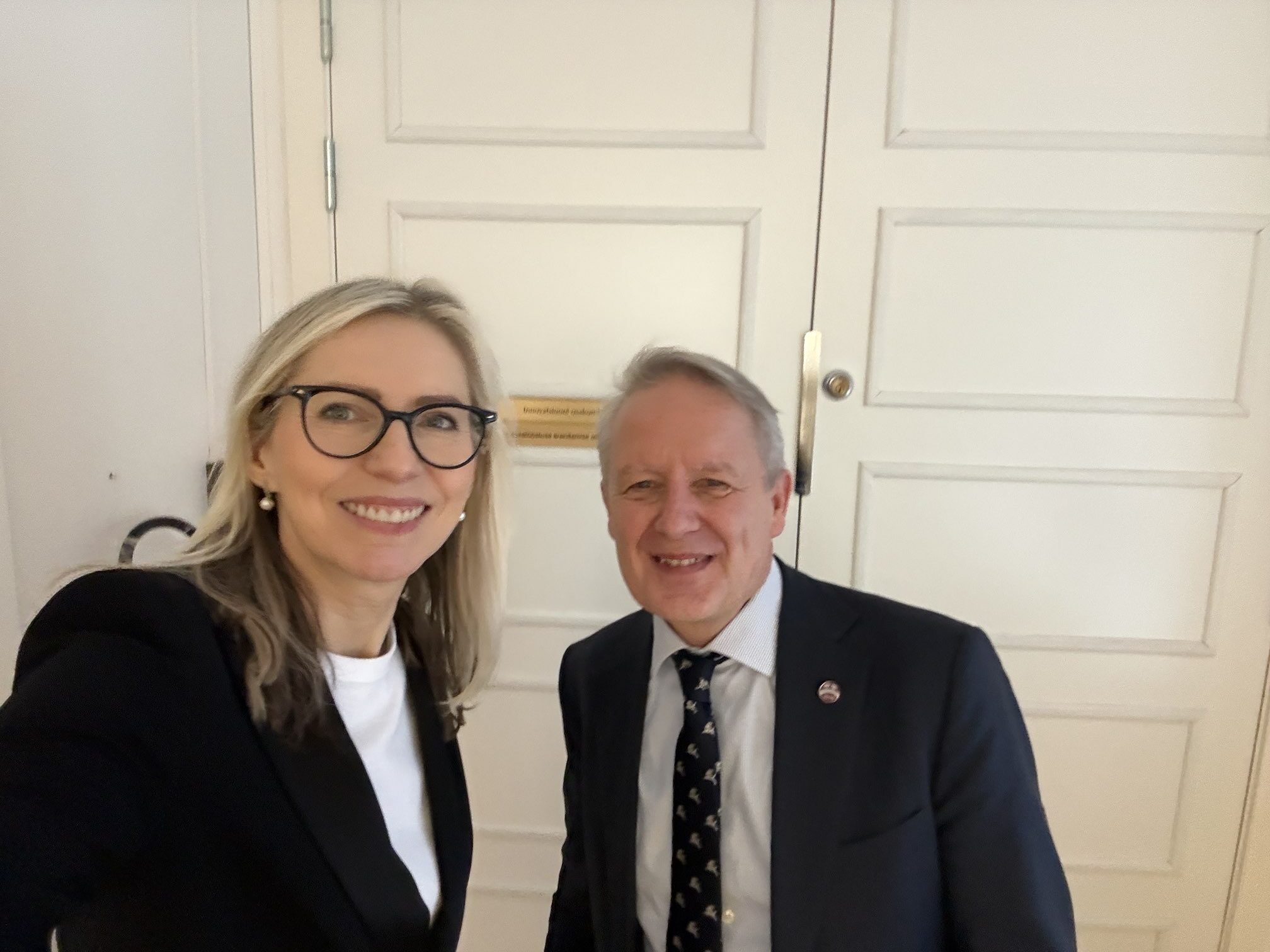
The only woman and the only non-military voice on the panel. That was the starting point for our founder Margot Roose at the Baltic Defence College’s Senior Leaders’ Course in Tallinn.
Whole-of-Society Panel: Hybrid Warfare and Resilience in the Baltic Sea Region
Moderator: Ambassador Jack Twiss Quarles van Ufford
- Col Linas Idzelis, Commander of the Lithuanian Riflemen’s Union
- Peeter Ivask, Advisor, National Security and Defence Coordination Unit, Estonia
- Dr Julien Theron, European Commission Joint Research Centre
- Margot Roose, Founder of Urban Exchange Alliance and former Deputy Mayor of Tallinn
The city perspective
As Deputy Mayor of Tallinn, Margot was responsible for entrepreneurship, innovation and circularity, including the waste system. Resilience was not formally in her portfolio, and that is exactly the point. Resilience came to her through two doors. Innovation: through Test in Tallinn, the city piloted solutions that help a city cope in a crisis. And waste: if collection stops for two weeks in winter, you have a public health problem. In a city, resilience is a shared responsibility of every deputy mayor, every department and every service.
For a city, it doesn’t matter what caused the crisis: a storm, a cyberattack, a cut cable or a missile. The consequences land in the same place, on people and on city services. Resilience means the water runs, the heating works, the home-care nurse reaches the elderly in need, schools open, and people know what to do.
One law, and the city owns the consequences
Estonia’s new Crisis Situation and National Defence Act came into force on 1 October. It replaces three laws with one: no separate rulebooks for a storm and a war. That matters in hybrid warfare, where you often cannot tell an accident from an attack. Attribution comes late, and the response cannot wait.
The law is clear on cities: when water, sewage, district heating or local roads fail, the city leads. And of Tallinn’s fourteen permanent crisis tasks, eight are social services – home care, care homes, safe houses, children separated from their families. Generals think of fuel and power. Mayors think of care.
A crisis rarely comes from where you expect it
On New Year’s Eve 2025, the canal that brings water from Lake Ülemiste into Tallinn’s network froze shut. A rare mix of frost and wind created needle ice, a 25-centimetre wall on the intake grate. Divers broke it, and it formed again. At the same time, the city was using one and a half times its normal amount of water. Parts of Tallinn lost water pressure, hospitals and rescue services were warned, and crews worked through the night until supply was back on the morning of 1 January.
No enemy, no missile, just ice. Now imagine the same failure caused on purpose, on a holiday night, alongside a cyberattack and disinformation. The city’s job would be the same.
Today, Tallinn runs crisis reserves, evacuation sites and exercises through its municipal police, plans to receive at least 10,000 evacuated people, has resilience centres and a volunteer crisis reserve, is piloting its first modular public shelter based on a Ukrainian design, and learns from Ukraine while giving back – this February it sent generators from its own stockpile to Zhytomyr.
Three asks to defence leaders
- Treat cities as partners in defence planning. The consequences land there first.
- Bring city services into your exercises. Water, heating, home care, schools.
- Invest in trust. It is the hardest thing to rebuild in a crisis.
Resilience is not only what the army does at the border. It is what a city does every day, so that on the worst day, life goes on.
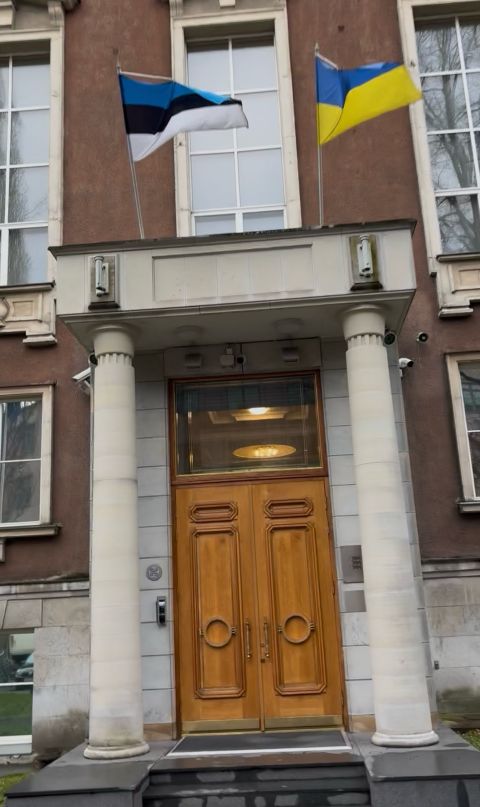
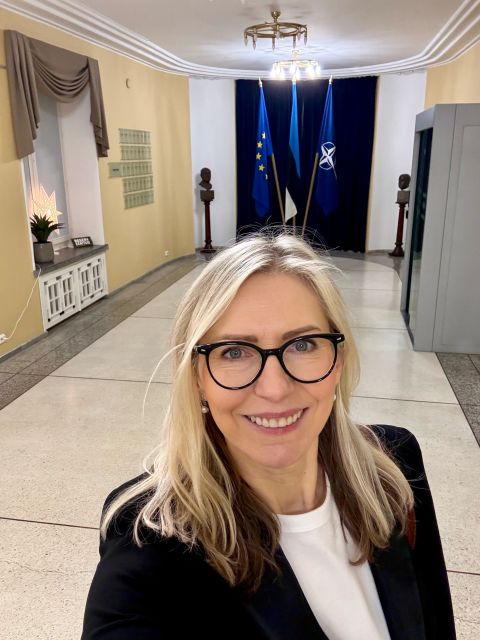
No panel or audience photos this time, for obvious reasons. But we did find the Innovation Department’s door at the Ministry of Defence. A big thank you to Jack for the invitation and for his elegant and knowledgeable leading of the panel – and warm congratulations on the Medal of Merit of the Dutch Ministry of Defence he received the same evening, so well deserved for many years of bridge building. Thank you also to BALTDEFCOL and Col (ret.) Dr Çlirim Toci for bringing us together.